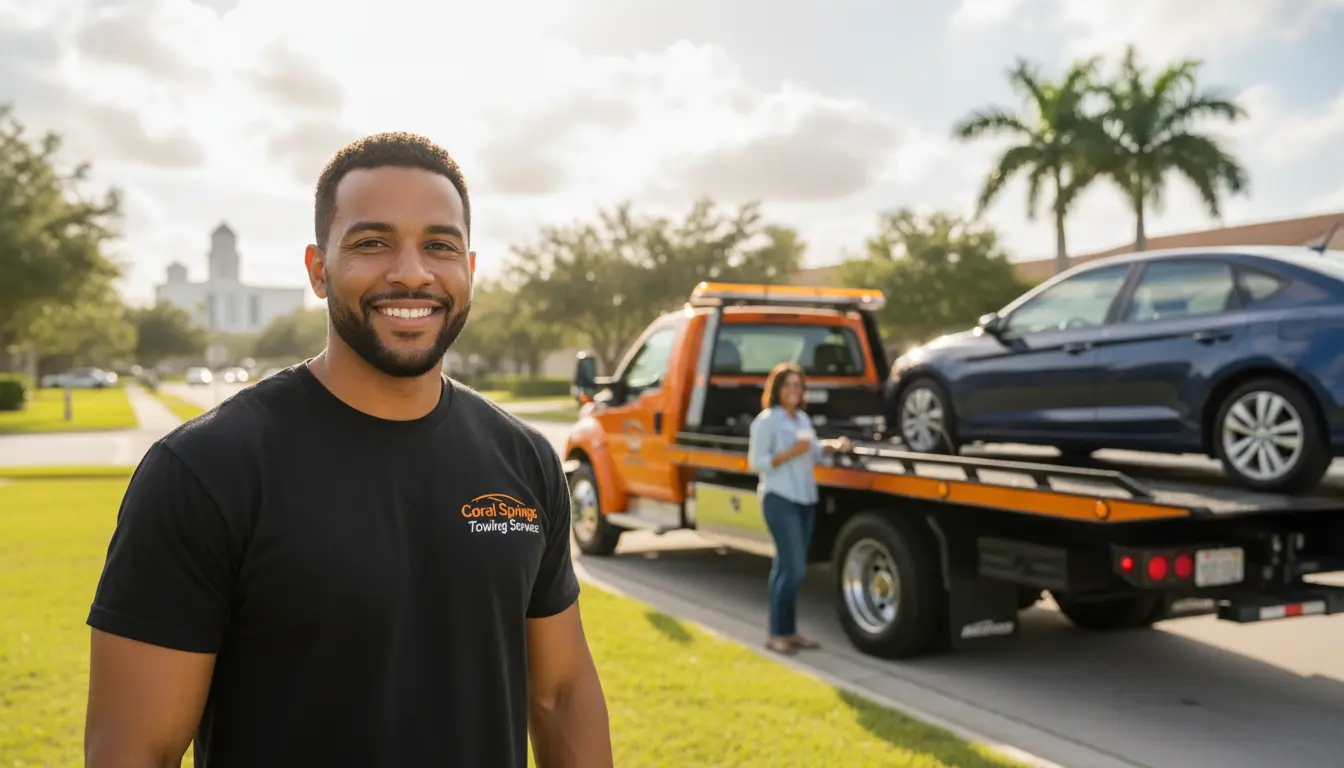
It’s a sweltering summer afternoon in Coral Springs, Florida, and the humid air clings to the pavement like a damp shroud. As the sun beats down relentlessly, the roads begin to shimmer and distort, making every drive a potential hazard. For those who find themselves stranded on the side of the road, the situation can quickly become dire. That’s where professional vehicle recovery and damage-free towing maintenance come into play, as provided by reputable services like in Coral Springs. In this article, we’ll delve into the critical differences between emergency towing and vehicle transport, highlighting the importance of choosing the right service for your specific needs.
The streets of Coral Springs are notorious for their congestion, particularly during rush hour when University Drive and Sample Road become veritable parking lots. Add to this the intense heat and humidity, and you have a perfect storm of conditions that can cause even the most reliable vehicles to break down. When this happens, it’s essential to have a trustworthy towing service on hand to minimize downtime and prevent further damage. By understanding the distinction between emergency towing and vehicle transport, drivers can make informed decisions about their vehicle’s care and safety.
In Coral Springs, where the subtropical climate and frequent flash flooding can wreak havoc on roads and vehicles alike, the need for expert towing and recovery services cannot be overstated. Whether you’re dealing with a simple flat tire or a more complex issue like hydrostatic locking, having access to a knowledgeable and equipped team can make all the difference. As we explore the technical process and expert insights surrounding emergency towing and vehicle transport, it becomes clear that these services are not interchangeable, but rather tailored to specific situations and requirements.
Technical Process
The technical process involved in emergency towing and vehicle transport is multifaceted and requires a deep understanding of factors such as gross vehicle weight rating, working load limit, and drivetrain decoupling. For instance, when dealing with a vehicle that has become stuck in the soft limestone mud near the Everglades border, the approach must be careful and calculated to avoid causing further damage. This might involve the use of counter-rotating winches, heavy-duty underlifts, or truck-mounted extraction units, each selected for its ability to manage kinetic energy and surface friction interactions effectively.
Moreover, the process of hydraulic flatbed deployment, four-point tire securement webbing, and air-ride lowering dynamics must be executed with precision to ensure the safe and damage-free transport of the vehicle. This level of expertise is crucial in high-stress situations, such as when extracting a vehicle from a congested area like University Drive during peak hours. By leveraging the latest technologies and techniques, professional towing services in Coral Springs can mitigate risks and provide reliable support to drivers in need.
Data Comparison Table
When considering the options for vehicle recovery and transport, it’s helpful to compare the benefits of professional flatbed logistics versus conventional hook and chain methods. The table below highlights key differences in drivetrain isolation, frame stress, and approach clearance angles, demonstrating the superiority of flatbed logistics in preserving vehicle integrity and safety.
Source: TRAA Vehicle Recovery and Rigging Reference Guide
Expert Insights
One critical aspect of vehicle recovery is understanding the potential for hydrostatic locking when restarting an engine in deep water. This mistake can lead to significant damage, including transmission failure, and underscores the importance of proper drivetrain decoupling and handling techniques. Furthermore, the positioning of the vehicle on the shoulder of Broward corridors, such as University Drive, requires careful consideration to avoid compounding the issue and to ensure the safety of both the vehicle and its occupants.
For electric vehicles, the process of drivetrain decoupling is particularly nuanced, necessitating a deep understanding of the vehicle’s specific mechanics to prevent errors that could result in structural bending or other forms of damage. By consulting with experts who have experience in handling a variety of vehicle types, including electric and hybrid models, drivers can ensure that their vehicle receives the care it needs, regardless of the situation.
Pricing
The cost of emergency towing and vehicle transport services can vary widely, depending on factors such as the type of vehicle, the distance to be transported, and the specific services required. Some key considerations include:
- Standard hookup fees, which can range from $50 to $200, depending on the service provider and the location.
- Per-mile transport fees, which typically range from $2 to $5 per mile, although this can vary based on the type of vehicle and the transport method.
- Fixed regional pricing for specific items, such as motorcycle transport cradles or heavy-duty equipment extraction, which can range from $100 to $500 or more, depending on the complexity of the job.
- Tonnage matrices and complex recovery variables, which can significantly impact the final cost of the service, potentially adding hundreds or even thousands of dollars to the total.
- Biological or chemical fluid containment, which may be necessary in certain situations and can add to the overall cost of the service.
- Distance from the main paved roadway, which can affect the difficulty and cost of the recovery operation.
Safety & Standards
Safety is paramount in the towing and recovery industry, with services adhering to strict standards and protocols to ensure the protection of both people and vehicles. This includes compliance with federal Department of Transportation regulations, such as the use of high-strength alloy master links and synthetic winch lines with certified working load limits. Additionally, services must be mindful of environmental fluid containment protocols to prevent spills and other hazards.
Certifications like TRAA/ANSI Class 3 are indicators of a service’s commitment to safety and quality, demonstrating a level of expertise and adherence to best practices that can provide peace of mind for drivers in need of assistance. By choosing a reputable and certified towing service, individuals can help ensure that their vehicle is handled with care and that the recovery process is conducted in a safe and efficient manner.
FAQ Section
What is the difference between emergency towing and vehicle transport?
Emergency towing and vehicle transport are two distinct services, each designed to address specific needs. Emergency towing is typically used in situations where a vehicle is stranded or inoperable, requiring immediate assistance to move it to a safe location. Vehicle transport, on the other hand, refers to the relocation of a vehicle from one point to another, often over longer distances and without the urgency of an emergency situation.
How do I choose the right towing service for my needs?
Choosing the right towing service involves considering several factors, including the type of vehicle, the nature of the issue, and the service’s reputation and certifications. It’s also important to inquire about their experience with vehicles similar to yours and their ability to handle complex recoveries. Additionally, reviewing their pricing structure and ensuring they are compliant with all relevant safety and regulatory standards can help you make an informed decision.
What safety precautions should I take when my vehicle is being towed?
When your vehicle is being towed, it’s essential to ensure that all personal belongings are removed and that the vehicle is properly secured to the towing vehicle. This includes verifying that the towing service uses appropriate straps, chains, or other securing devices to prevent damage during transport. Furthermore, staying informed about the towing process and maintaining open communication with the towing service can help alleviate concerns and ensure a smooth recovery.
Can I use my vehicle’s insurance to cover towing costs?
The ability to use your vehicle’s insurance to cover towing costs depends on your specific policy and the circumstances of the tow. Some insurance policies include roadside assistance or towing coverage, which can help offset the costs associated with emergency towing or vehicle transport. It’s always a good idea to review your policy documents or consult with your insurance provider to understand what is covered and what is not.
How long does a typical towing operation take?
The duration of a towing operation can vary significantly, depending on factors such as the distance to be traveled, the complexity of the recovery, and the time of day. In general, emergency towing operations are prioritized and can often be completed within a few hours, although this timeframe can be affected by factors such as traffic and the availability of towing equipment. For longer-distance vehicle transport, the timeframe can extend to several days or even weeks, depending on the route and the mode of transport used.
What happens if my vehicle is damaged during towing?
If your vehicle is damaged during towing, it’s crucial to document the damage thoroughly and notify the towing service immediately. Reputable towing services carry insurance to cover damages that may occur during the towing process, and they should work with you to address any issues promptly and fairly. In some cases, this may involve filing a claim with the towing service’s insurance provider or seeking compensation for repairs.
Professional Vehicle Logistics in Coral Springs
In conclusion, the distinction between emergency towing and vehicle transport is significant, and understanding these differences is vital for making informed decisions about your vehicle’s care and safety. By choosing a reputable and certified towing service in Coral Springs, such as, you can ensure that your vehicle receives the professional attention it needs, whether you’re dealing with a routine transport or an emergency recovery situation. Remember, the right service can make all the difference in preserving your vehicle’s integrity and getting you back on the road quickly and safely.
For more information on towing and recovery services, including tips on how to choose a reliable towing service and what to expect during the towing process, visit our Blog or contact us directly at Contact Us. Our team is dedicated to providing the highest level of service and support to drivers in Coral Springs and surrounding areas, and we look forward to the opportunity to serve you.